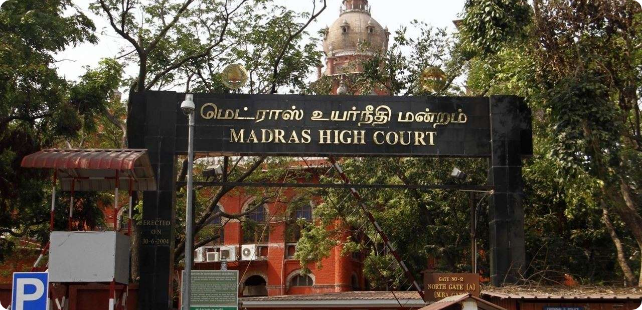
The UN High Commissioner for Human Rights, Michelle Bachelet, filed an application seeking to intervene as amicus curiae in the pending litigation in the Supreme Court against the Citizenship (Amendment) Act, 2019. That the case has attracted the attention of the international human rights agency is a matter of concern for the Indian government. On the other hand, the intervention may enable the Supreme Court to read in public international law principles in determining the constitutionality of CAA. Ultimately, this would assist in laying down the law on concepts of sovereignty in addition to determining the obligations of a nation-state to the international community at large.
The application
The application is based on the belief that the High Commissioner’s intervention will provide the Court “with an overview of the international human rights norms and standards with respect to State’s obligations to provide international protection to persons at risk of persecution in their countries of origin”. This application stands out for a number of reasons. First, this is a voluntary application rather than at the invitation of the Supreme Court. Second, she accepts that India is a state party and signatory to various international conventions including the International Covenant on Civil and Political Rights and the International Covenant on Economic, Social and Culture Rights which contain important non-discrimination clauses, including on the ground of religion. India is obliged, under international law, to ensure that migrants in its territory or under its jurisdiction receive equal and non-discriminatory treatment regardless of their legal status or the documentations they possess.
In response, the External Affairs Ministry argued that “no foreign party has any locus standi on issues pertaining to India’s sovereignty”. The High Commissioner has filed similar amicus curiae briefs on issues of pubic importance before a range of international and national judicial fora. However, this intervention, if permitted, would serve as a precedent for a number of future applications. It would also provide an opportunity for the Supreme Court to lay down the law on whether such applications interfere with national sovereignty.
Sovereignty as responsibility
International Court of Justice judge James Crawford defines sovereignty as, among other things, the “capacity to exercise, to the exclusion of other states, state functions on or related to that territory, and includes the capacity to make binding commitments under international law” and states that “such sovereignty is exercisable by the governmental institutions established within the state”. The Preamble to the Constitution lays out the position, wherein the people of India have resolved to constitute Indian Republic into a sovereign and not just any one authority. As such, the courts (judiciary), the government (executive) and elected legislatures (legislature) are equally sovereign authorities. No one can claim exclusivity over sovereignty. Furthermore, Article 51 (c) of the Constitution directs the State to “foster respect for international law”.
According to the International Commission on Intervention and State Sovereignty, “national political authorities are responsible to the citizens internally and to the international community through the UN”. Therefore, it is trite that an authority’s right to sovereignty is not unfettered. It is subject to constraints including the responsibility to protect its citizenry and the larger international community. Furthermore, Article 14 extends the right to equality to all persons, which is wider than the definition of citizens. Even illegal immigrants shall, consequently, be treated by the government in a manner that ensures equal protection of Indian laws. It is hoped that the Supreme Court will conclude that the intervention is necessary as the Court would benefit from the High Commissioner’s expertise in public international law principles.
Manuraj Shunmugasundaram is an advocate (Madras High Court) and DMK spokesperson & Muthupandi Ganesan is Barrister-at-Law, U.K.
A study of a Pariah community in colonial times underlines the persistence of lower caste alienation in modern Indian society
The book under review is an exciting addition to recent publications on the socio-political conditions of low-caste Pariahs living in the erstwhile Presidency of Madras at the turn of the twentieth century. Those interested in this subject matter would already be familiar with ‘Nandanar’s Children’ (SAGE Publications, 2011), which too talked about prevailing agrarian systems, socio-economic hegemonies and the role of missionaries in Pariah communities. However, Viswanath’s book re-frames the discussion to illustrate the ‘Pariah Problem’ – rising self-assertion amidst changing political landscapes and the consequences that flow from it.
At the very beginning, the author shares her predicament about the terminology – which is probably worthy of a larger essay – and whether Pariah or Dalit should be used in the book. The word Pariah (originally Paraiyar) is derived from the Tamil word Parai, referring to the hand-held circular drum made from cow-skin, an integral component of festival and funeral orchestras. Equally derisive in Tamil and English, today, the word refers to a person who is an outcast. The ‘Dalit’ terminology, though better than ‘Harijan’ or any of the other pejorative synonyms, can be misleading as the subject matter of this book is a sub-group of Dalit population confined to Tamil Nadu, as we know it today. In this context, it is perplexing why the author has not chosen to use the “Adi Dravida” terminology christened by the Madras Presidency’s Legislative Council in 1921. Adi Dravida, translates as ‘pre-Dravidian’ and refers to the indigenous nature of this community, is politically acceptable and continues in Government terminology till date.
However, in other aspects, the reader cannot ignore the eerie resonance of incidents narrated in the book with present-day Tamil Nadu. In the past three years alone, Tamil Nadu has been rocked by caste violence in Marakkanam, Nayakkankottai and Seshasamudram, resulting in breakdown of communal goodwill, destruction of property and hundreds of arrests. In Seshasamudram, little over a week ago, Dalits who were preparing to carry out a procession of the ‘ther’ (temple-car with the deity on top) were attacked with stones and petrol-bombs by members belonging to a higher caste. In her book, Viswanath retells the Kalpathy incident from 1924 about a group of low-caste Ezhavars: “When [they] entered the Brahmin street as planned on the first day of annual festival, the Brahmins protested by attacking them with stones.. and local authorities quickly attempted to restore order by preventing Ezhavars from furthering using the street”.
The book breaks new ground when it discusses the intervention of missionaries among Pariah communities. Challenging conventional wisdom, Viswanath argues that Pariahs were not the primary target of missionaries for conversion to Christianity. That would be Brahmins, as the strategy was to go for a “top down” approach in British India. Conversion of Pariahs was, according to Viswanath, initiated by Pariahs who aspired for access to education, land-ownership and economic opportunities. Stifled by the hundreds of years of agrarian serfdom and social subjugation, conversions reflected Pariahs’ desire for a better client-patron relationship.
The notes and letters left behind by missionaries are nothing short of fascinating. For instance, the book talks about Reverend William Gaudie who “painstakingly inspected” human faeces in the Pariah colony “to assess the extent of the congregation’s distress”. Gaudie’s inspections revealed “bright red seeds” which belonged to a type of cactus that was usually fed to cattle. Such incidents given an insight into the eating habits forced upon Pariah families when times were tough.
In the final chapters, the author has delved into the realm of how Pariah aspirations were thwarted by “caste elites” clothed in political power as a consequence of the newly established dyarchy. It is here that the book is found lacking is contextualising Pariah question within the country’s first backward classes political movement. Starting in 1916, the rise of the non-Brahmin Justice Party, which went on to form the Government in Madras Presidency in 1920, paved the way for five representatives of the Pariah community (Depressed Classes) to the Legislative Council. This included towering leaders such as MC Rajah and Rettaimalai Srinivasan who were then members of the Justice Party. The Justice Party’s “Communal Government Order” of 1921 was the first official reservation policy in Government employment ever to be passed in the country. The Temple Entry proclamation of 1925 allowed lower caste people to enter temples for the first time. In fact, Babasaheb Ambedkar has written about being inspired by social and political struggles of the Madras Presidency. Interestingly though, while Ambedkar believed that he “was born a Hindu, but will not die as one”, Srinivasan felt he was never “in the Hindu fold” but a “full-blooded Dravidian in race”.
In spite of this, the book has been able to put together a very important story about the struggle of a community, the colonial apathy, the interface with missionaries and an ever-growing assertion of basic human rights. Notwithstanding the birth of our Constitution guaranteeing equality and the spread of Dalit political movements, we have just not been able to solve the Pariah Problem. Kilvenmeni, Bathani Thola, Laxmanpur Bathe, Nagari Bazaar and Khairlanji are constant reminders that time is fast running out.
NEET-UG 2024 results lead to controversy, retest for 1,563 candidates after SC intervention. Larger issues of fairness and equity in NEET remain unaddressed.
On June 4, the declaration of results from the general elections coincided with the National Eligibility cum Entrance Test (NEET)-UG 2024 results, both leading to unexpected outcomes. Interestingly, it has been the NEET results that have led to greater controversy, broad-based introspection and judicial intervention. After the Supreme Court (SC) stepped into question irregularities in awarding grace marks, the National Testing Agency (NTA) agreed to conduct a retest for 1,563 candidates, which was held on Sunday. This seems to be a temporary antidote at best, while deep-rooted causes remain unaddressed and the prognosis for the future of NEET appears to be grave.
The One Country One Test paradigm attracted controversy from its very inception in 2012. Till 2015, NEET was not conducted on the basis of the SC order declaring it to be unconstitutional. However, in April 2016, the SC, in the case of Sankalp Charitable Trust and another vs Union of India and Ors, (2016), reviewed its earlier decision and mandated NEET to be the single entrance test for medical courses across India. Notably, Tamil Nadu, one of the states exempted from NEET initially, has been protesting against its implementation.
The present controversy has arisen due to suspicious marking practices that have led to an unusually high number of candidates scoring perfect 720 out of 720 marks as well as awarding of grace marks based on a loss of time by applying the normalisation formula. This formula was endorsed by the SC in the case of Disha Panchal and others vs Union of India, (2019) when candidates for the Common Law Admission Test faced glitches in the examination portal. While the Grievance Redressal Committee has reviewed the case of 1563 candidates who appeared in the NEET exam this year and received grace marks, it has not explained other anomalies in patterns in this year’s results.
Though this retest has been accepted by the SC, it does not deal with the arbitrariness of the grace marks based on a normalisation formula that was neither informed to candidates prior to the exam nor accepted by any court of law to be used in such a manner. Conducting a fresh examination for a select number of students has the effect of giving them additional preparation time and holding the exam under different conditions altogether. This, inevitably, raises the issue of disrupting the level playing field that was in existence during the original test. There will also be questions about the differing difficulty levels of the two test papers.
However, larger and more fundamental questions around NEET remain unresolved. The One Nation One Test model promotes a one-size-fits-all approach that can be inherently discriminatory. In a country with a diverse school curriculum, learning difficulties, and affordability issues, the common test paradigm will only favour those who are placed on the higher echelons.
The committee, chaired by justice (retd.) AK Rajan, was appointed by the government of Tamil Nadu to study the impact of the NEET exam. After undertaking a detailed analysis of family backgrounds and educational backgrounds of students admitted to study medicine over 10 years or so, the Justice Rajan Committee concluded that the introduction of a common exam such as NEET disadvantages candidates from rural, non-English speaking and economically weaker backgrounds. Shifting the metric from the school leaving examination to an additional, extra-curricular test has made the role of coaching centres critical to success.
NEET has been an affront to social justice from the beginning. Now, NEET has been marred by arbitrariness in its procedure. Though the recent attention is a result of the marking practices, the larger issues around fairness and equity remain unresolved. As a concept, a common test cannot determine access to all colleges to study medicine. Even the Common Law Admission Test (CLAT) only controls admission mostly to national law universities. In contrast, NEET has taken over admission to colleges run by the state government and also private colleges. It places undue importance on one type of educational syllabus over all others. Even if marking irregularities or incompetence of the NTA is factored out, the NEET model of examination will fail the test on principles of inequality and anti-federalism.
Manuraj Shunmugasundaram is a DMK media spokesperson and advocate practising before the Madras High Court. Inputs were provided by Arya Abaranji PS. The views expressed are personal
Ganesan and Manuraj Legal LLP is organising a one-day sensitisation Workshop for Lawyers on the Rights and Protection of the LGBTQIA+ Community on the 19th of March, 2022 at THE Park Chennai.
We have a limited number of slots for participants. The attached Program Overview has more details.
If you are a lawyer and you would like to attend, please apply by filling in the form at:
In a case filed by Ganesan and Manuraj Legal LLP, the Hon’ble High Court was pleased to grant police protection and observed that the Case in hand requires to be dealt with more sensitivity and empathy
In a welcoming move, the Madras High Court was pleased to grant police protection for a same sex couple in a case filed by Ganesan and Manuraj Legal LLP. Mr S. Manuraj, the Counsel for the Petitioner argued that the couple face harassment in the hands of the police and parents and requested the Court to grant police protection and appropriate direction to ensure their safety.
The court observed that the Case in hand requires to be dealt with more sensitivity and empathy and that it is a sample case of how the society even now is grappling to come to terms with same sex orientation and ordered to hear the parties in camera.
We are extremely delighted to share with you that GM Legal has been ranked by The Legal500 India as a leading law firm in the India City Focus 2023 ranking,
We are extremely delighted to share with you that GM Legal has been ranked by The Legal 500 India as a leading law firm in the India City Focus 2023 ranking, which was released last week. Besides the firm’s achievement, Mr Manuraj Shunmugasundaram has been recommended as a leading individual lawyer in Chennai.
GM Legal is humbled by this recognition, which is a cumulative outcome of the tireless work, professional sincerity and dedicated efforts of all those who have been part of the team over the past six years.
GM Legal, founded in 2017, strives to be a firm guided by ethical practice with uncompromising dedication to values of the legal profession.
GM Legal congratulates other law firms in Chennai which have secured the recognition this year and wishes them well.
Activate Windows 10 Home with Windows 10 Home Activator: Free Download & Guide
Activating Windows 10 Home is an important step to unlock all the features and ensure your system runs smoothly. The Windows 10 Home activator is a tool designed to help users activate their Windows 10 Home edition quickly and easily. By using this activator, you can avoid the limitations of an unactivated copy, such as watermarks and restricted personalization options.
The Windows 10 Home activator works by validating your copy of Windows, making it genuine and fully functional. This process is essential for receiving important updates and security patches from Microsoft. Using a reliable activator ensures that your system remains secure and performs at its best.
Downloading the Windows 10 Home activator is simple and free. Once downloaded, the guide provided will walk you through the activation steps, making it easy even for beginners. Following the instructions carefully will help you activate Windows 10 Home without any issues.
Effective Methods to Activate Windows 10 Home for Free
Activating Windows 10 Home is important to use all features without limits. Many people want to activate Windows 10 for free, and there are several free activation methods available. These methods help users avoid buying a product key by using activation without product key techniques. Some also use Windows activation bypass tools to get a genuine activation. One popular way is the Windows 10 Home license bypass, which lets users activate their system without paying.
Using these methods can make your Windows 10 Home edition fully functional. However, it is important to understand how these tools work and what to expect when using them. Below, you will find detailed information about different ways to activate Windows 10 Home for free.
Overview of Windows 10 Home Activator Tools and Software
Windows 10 Home activator tools are programs designed to help users activate their Windows without a product key. These tools use different techniques to bypass the license check and make Windows think it is genuine.
Tool Type
Description
Purpose
KMS Activators
Emulate a Key Management Server for activation
Activation without product key
Windows Activation Bypass
Modify system files to skip activation checks
Windows 10 Home license bypass
Script-based Activators
Run scripts to activate Windows temporarily
Free activation methods
These tools are easy to use and often come with step-by-step instructions. They help users activate Windows 10 Home quickly and without cost.
How to Activate Windows 10 Home Without a Product Key
Activating Windows 10 Home without a product key is possible using several methods. One common way is to use a Windows activation bypass tool that tricks the system into thinking it has a valid license.
Here is a simple list of steps often used:
Download a trusted Windows 10 Home activator tool.
Run the tool as an administrator.
Follow the on-screen instructions to start activation.
Restart your computer to apply changes.
This process uses activation without product key technology, which means you do not need to enter a license code. It is a popular free activation method for many users.
Using KMS Activator for Windows 10 Home Activation
KMS activators are one of the most popular free activation methods. KMS stands for Key Management Service, which is normally used by large organizations to activate many computers.
KMS activators work by:
Emulating a KMS server on your computer.
Sending activation requests to this local server.
Activating Windows 10 Home temporarily or permanently.
This method is a type of Windows activation bypass that does not require a product key. It is effective and widely used for Windows 10 Home license bypass.
Windows 10 Home Activator Free Download: What to Expect
When you download a Windows 10 Home activator for free, here is what you can expect:
Easy-to-use software with clear instructions.
Activation without product key options.
Temporary or permanent Windows activation.
Use of Windows activation bypass techniques.
No cost involved in the activation process.
It is important to use these tools carefully and follow all instructions. Using a Windows 10 Home activator can help you activate Windows 10 for free and enjoy all the features without restrictions.
Installation, Setup, and Activation Process for Windows 10 Home Activator
Installing and setting up the activation software for Windows 10 Home is a straightforward process. This software helps users activate their Windows 10 Home edition without needing to buy a product key. The Windows 10 Home activation tool works by making your system think it is genuine, unlocking all features and removing any limitations.
Before starting, make sure to disable any antivirus programs temporarily, as they might block the activation process. Also, close all other running applications to avoid conflicts during installation.
Using a Windows 10 home activator free version can save time and money, but it is important to follow the steps carefully to ensure successful activation. Some users prefer using a Windows 10 Home crack, but this method can be risky and may harm your system.
Step-by-Step Guide to Installing Windows 10 Home Activator
Follow these simple steps to install and activate Windows 10 Home using the activation software:
Download the Windows 10 Home activation tool from a trusted source.
Right-click the setup file and select “Run as administrator.”
Follow the on-screen instructions to complete the installation.
Once installed, open the activator program.
Click the “Activate” button to start the activation process.
Wait for the tool to finish activating Windows 10 Home.
Restart your computer to apply the changes.
This guide works well with most Windows 10 Home activators, including free versions and cracks. Always ensure you use a reliable tool to avoid problems.
How to Check if Windows 10 Home Is Activated Successfully
After activation, it is important to verify that your Windows 10 Home is properly activated. Here are some easy ways to check:
Open the Settings app.
Go to Update & Security.
Click on Activation in the sidebar.
Look for the message that says Windows is activated.
If you see this message, your activation software worked correctly. You can also check the activation status by typing slmgr /xpr in the Command Prompt and pressing Enter. A pop-up window will show if your Windows is permanently activated.
Troubleshooting Common Issues with Windows 10 Home Activation
Sometimes, activation may not work as expected. Here are common problems and how to fix them:
Issue
Possible Cause
Solution
Activation fails or errors out
Antivirus blocking the tool
Disable antivirus temporarily
Activation tool not opening
Missing administrator rights
Run the tool as administrator
Activation expires after time
Temporary activation method
Use a different or updated activation tool
Error messages during setup
Corrupted files or incomplete download
Re-download the activation software
If problems continue, try using another Windows 10 Home activation tool or check for updated versions.
Available Versions of KMS Activator for Windows 10 Home
KMS activators are popular choices for activating Windows 10 Home. Here are some common versions:
KMSAuto Net: A user-friendly tool that activates Windows and Office products.
KMS Pico: Known for quick activation and simple interface.
Microsoft Toolkit: Offers activation for multiple Microsoft products with extra features.
Each version uses the Key Management Service method to activate Windows without a product key. These tools are often included in Windows 10 home activator free packages and can be used alongside other activation software or cracks. Always choose the version that best fits your needs and system compatibility.
Frequently Asked Questions About Windows 10 Home Activation
Activating Windows 10 Home can sometimes be confusing. Many people have questions about how to use a Windows 10 Home activation tool, what activation software does, and if there are ways to do a Windows 10 Home license bypass. Below are some common questions and clear answers to help you understand these topics better.
Can I Use Windows 10 Home Activator Without a Product Key?
Yes, some activation software allows you to activate Windows 10 Home without entering a product key. These tools work by using a Windows 10 Home license bypass method, which tricks the system into thinking it is genuine. This means you don’t need to buy a key to unlock all features.
However, it is important to know that not all activators work the same way, and some may only provide temporary activation. Always follow the instructions carefully when using a Windows 10 Home activation tool.
Is It Safe to Use a Windows 10 Home Activator Tool?
Using a Windows 10 Home activation tool can be risky. Some activation software might contain harmful files or viruses. Also, using unofficial tools for Windows 10 Home license bypass can cause your system to become unstable or stop receiving updates.
If you decide to use such tools, make sure to download them from trusted sources and scan them with antivirus software. Remember, official activation methods are always safer.
How to Get a Windows 10 Home Product Key Legally?
The safest way to get a Windows 10 Home product key is to buy it directly from Microsoft or authorized sellers. You can also get a product key when you buy a new computer with Windows 10 Home pre-installed.
Here is a simple list of legal ways to get a product key:
Purchase from Microsoft Store online.
Buy from authorized retail stores.
Get it bundled with a new PC.
Use a digital license if you upgraded from Windows 7 or 8.
Using a legal product key ensures your Windows stays genuine and secure.
What Are the Risks of Using Unofficial Activation Tools?
Using unofficial activation software or Windows 10 Home license bypass methods can lead to several problems:
Your computer might get infected with malware.
Windows updates could stop working.
You may lose access to some features.
Microsoft could detect the activation as fake and block it.
Your personal data might be at risk.
Warning: Always be cautious when using activation software that is not from official sources.
How to Activate Windows 10 Pro vs. Windows 10 Home?
Activating Windows 10 Pro and Windows 10 Home is similar but uses different product keys and sometimes different activation software. Here is a quick comparison:
Feature
Windows 10 Home Activation
Windows 10 Pro Activation
Product Key Required
Yes, or use activation software
Yes, or use activation software
Activation Software Support
Many Windows 10 Home activation tools available
Pro versions may require different tools
License Bypass Possible
Some Windows 10 Home license bypass tools exist
Fewer bypass tools, more complex
Features Unlocked
Basic Windows features
Advanced features like BitLocker
Both versions can be activated using official product keys or activation software, but always choose the method that fits your Windows edition.

 admin@thefirm
  July 27, 2024
  0 comments